


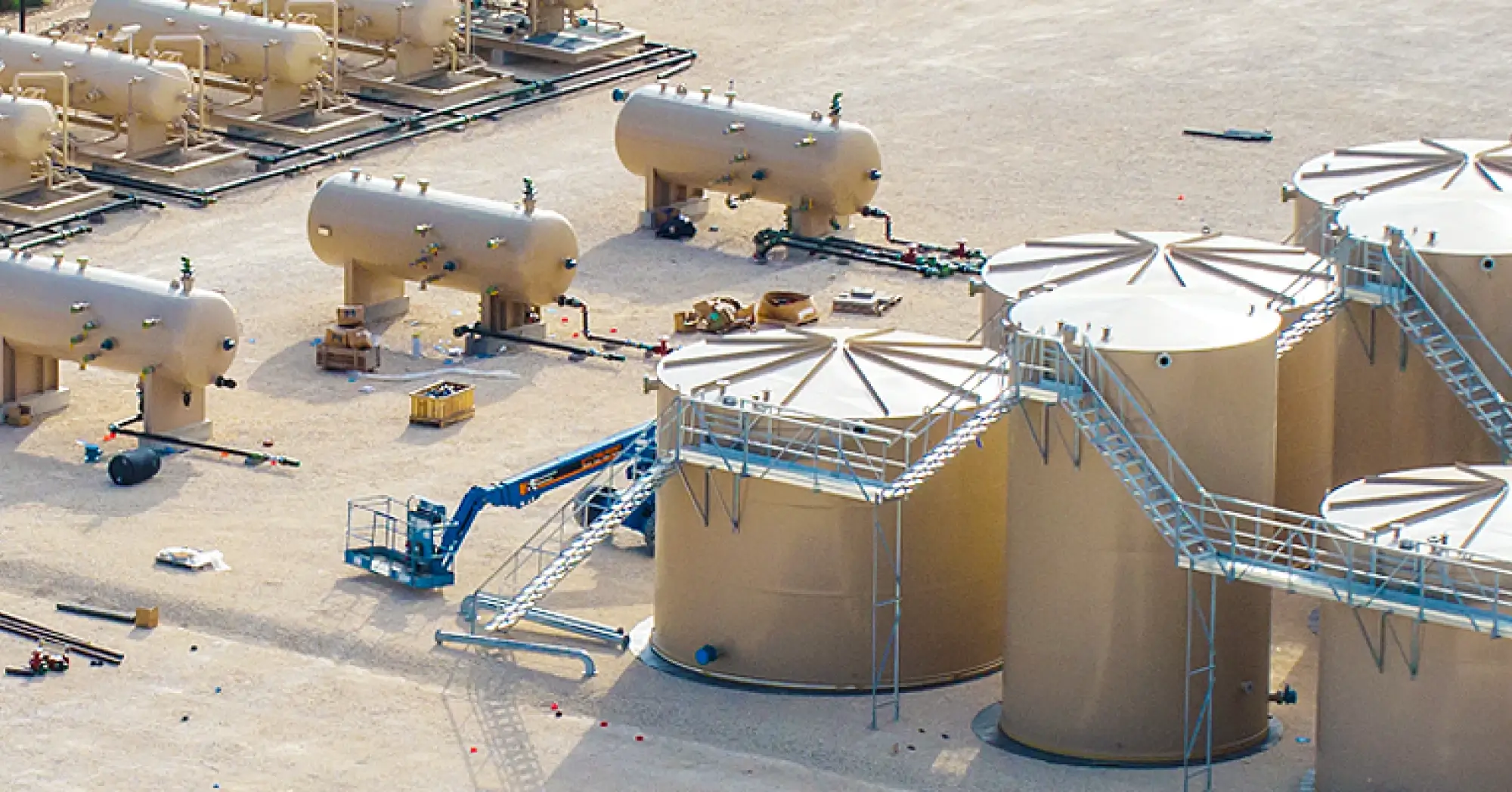
17 Apr How To Choose the Right Oil & Gas Separator for Your Well Site
What's at stake when you're choosing a separator for your oil and gas operation? The wrong separator throws your entire production stream out of whack: liquid carryover into your gas line, gas blowby into your oil, inconsistent readings, and equipment strain downstream. It all adds up fast.
The right oil and gas separator, properly sized and configured for your well's output, is one of the most consequential equipment decisions you'll make for a new or maturing pad.
Let's talk about the key variables to evaluate when selecting a separator for oil and gas production. We'll cover how the separation process works and help you determine when a standard unit fits the bill versus when you need something more specialized.
IN THIS ARTICLE
What a Production Separator Does
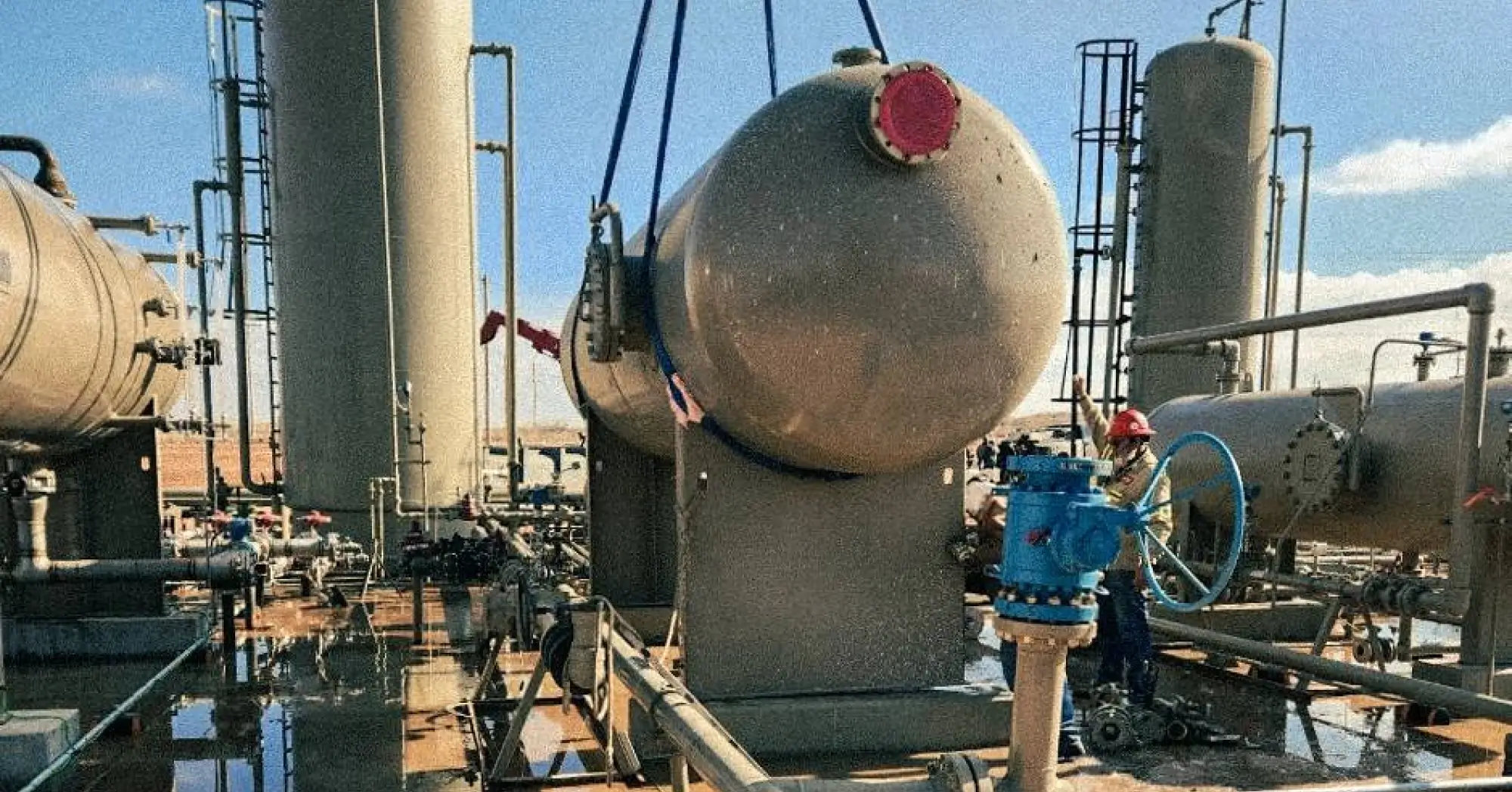
The job of any production separator in oil and gas operations is to take the mixed wellstream (crude oil, natural gas, produced water, and sometimes solids) and cleanly divide it into its component phases before anything moves downstream.
The oil and gas separation process works by exploiting natural density differences between gas, liquid hydrocarbons, and water. As the wellstream enters the vessel:
- Gas rises and exits through the top outlet
- Oil accumulates in the middle
- Produced water drops to the bottom
Mist extractors and inlet diverters knock out entrained liquids from the gas phase, while weirs and interface controls keep oil and water layers properly segregated. Getting the pressure rating, configuration, and sizing right for your wellstream is where the real engineering comes in.
Key Factors To Consider
Choosing the right separator depends on the specifics of your well, such as fluid composition, flow rates, operating pressure, and site logistics. Here are the five variables that should drive your decision.
1. Two-Phase vs. Three-Phase
- Two-phase separators handle gas/liquid separation. They're appropriate when produced water volumes are low enough that you're comfortable letting oil and water exit together and separating them downstream in a gun barrel or wash tank.
- Three-phase separators handle gas, oil, and free water simultaneously. If you're producing significant water cuts right out of the gate, three-phase is almost always the smarter long-term choice, even if the upfront cost is higher.
2. Horizontal vs. Vertical Orientation
- Vertical separators handle liquid surges well and have a smaller footprint. They're a good fit for tighter locations or lower-volume wells.
- Horizontal separators provide more liquid retention volume and a better gas/liquid interface area. They're generally preferred for higher GOR (gas-oil ratio) wells or wherever liquid carryover is a concern.
3. Operating Pressure Rating
Your separator needs to be rated for the wellhead pressures you're working with, with appropriate safety margins. Separators are available from 50 PSI to 5,800 PSI, covering everything from low-pressure conventional wells to high-pressure unconventional plays.
4. Heated vs. Non-Heatedg
Temperature matters, especially if you're dealing with waxy crudes, tight emulsions, or hydrate-forming conditions. In those cases, a non-heated separator alone won't get the job done.
5. Skidded vs. Fixed Installation
Skidded packages are the right move for pad drilling operations, multi-well sites, or any situation where you may need to relocate equipment. Fixed installations make sense for long-life facilities with stable, predictable output. Either way, make sure your skid layout integrates cleanly with your flowlines, instrumentation, and downstream equipment.
Test Separator vs. Production Separator: What's the Difference?
This question comes up often, particularly when operators are completing new wells and managing ongoing production on the same pad.
- A production separator provides continuous, long-term service. It handles the full wellstream around the clock, feeds downstream equipment, and is sized for the well's expected producing life.
- A test separator is a temporary or portable unit used to measure a well's production rate and fluid composition during initial flowback, production testing, or well optimization work. Test separators include accurate metering equipment (orifice meters, turbine meters, or Coriolis meters) to capture precise gas, oil, and water volumes. They're diagnostic tools, not production workhorses.
If you're measuring, use a test separator. If you're producing, spec the right permanent unit.
Don't Overlook Downstream LPG and NGL Storage
If your separated gas stream contains meaningful NGL or LPG components, such as propane, butane, or natural gasoline, you'll need downstream storage vessels sized and rated for those products.
LPG tank maintenance is a real operational consideration here. Pressure vessels handling liquefied petroleum gas require:
- Regular inspection and pressure relief valve testing
- Corrosion monitoring
- Compliance with ASME and NFPA 58 standards
What Happens When an Oil Separator Fails?
When a separator fails or underperforms, the effects cascade downstream fast:
- Liquid carryover into the gas line damages compressors and fouls dehydration units.
- Gas blowby into the liquid train throws off oil gravity readings at the LACT unit and creates vapor hazards in storage tanks.
- Control valve or float failures can lead to overpressure events, environmental releases, or unplanned shut-ins.
That's why vessel integrity, quality instrumentation, and reliable level controls matter from day one. Equipment that cuts corners on internal components, pressure ratings, or instrumentation ports will cost you more in downtime and repairs than you ever saved at purchase.
Dragon Production Separators, Built for the Oilfield
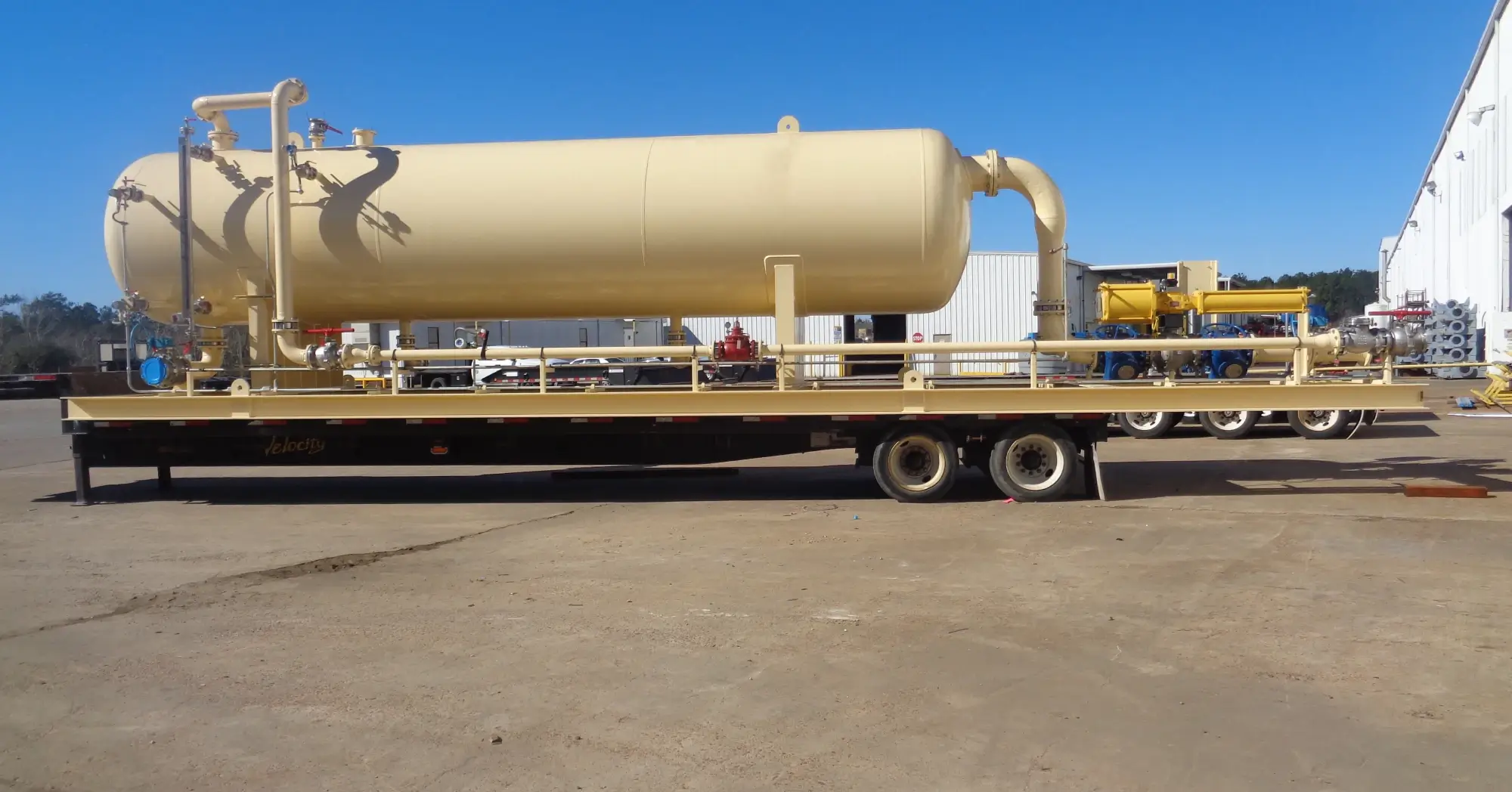
Dragon Products has been building production equipment for the oil and gas industry since 1963. Every separator is designed, manufactured, tested, and certified in-house to API and ASME standards. When a Dragon unit shows up on your well site, it's engineered to spec, not assembled to a price point.
Dragon's production separator lineup includes:
- 2-phase and 3-phase separators: Vertical and horizontal, 50–5,800 PSI, ASME code and non-code.
- Heater treaters: 50–1,440 PSI, for emulsion-breaking and heated separation applications.
- Free water knockout units: Sized to fit your water removal needs.
- Vapor recovery towers: For emissions reduction goals.
- LPG/NGL storage vessels: ASME-certified, 12,000 to 90,000-gallon capacity.
Pro Tip: Having a service partner like Dragon Products, with field teams that respond quickly and a deep parts inventory to back them up, is worth factoring into your equipment decision.
Rely on Dragon Products for the Best Oil and Gas Separator for Your Site
Whether you're equipping a new pad or upgrading aging production equipment, Dragon's team has the experience and the product line to get you spec'd right the first time. All of it is backed by field service teams and a parts inventory ready to keep your operation running when it matters. Request a quote or call 800.231.8198 to talk to a Dragon production equipment specialist today.
Production Equipment | Dragon Products
Dragon Products has the expertise to build equipment exactly to your specifications and produce it in volume, quickly.
Oil & Gas Separator FAQs
What is the function of a production separator?
A production separator divides the mixed wellstream (crude oil, natural gas, produced water, and entrained solids) into separate phases before anything moves to downstream processing or storage. Using gravity, residence time, and vessel flow dynamics, it allows gas to exit through the top, oil to accumulate in the middle, and water to settle at the bottom. Clean phase separation upstream protects compressors, storage tanks, and metering equipment from slugging, carryover, and contamination that would otherwise reduce efficiency and drive up maintenance costs throughout the production system.
What is the difference between a test separator and a production separator?
A test separator is a temporary, metered unit used to measure a well's individual production rates and fluid composition during testing or flowback evaluation. It gives operators the data they need to make informed decisions about completions, artificial lift, or surface facility sizing. A production separator is a permanent or semi-permanent unit that provides continuous, high-volume service during the life of the well. It handles the full wellstream reliably without the measurement focus of a test unit. Substituting a test separator for a production unit long-term leads to backpressure issues, skewed reservoir data, and equipment wear that it was never meant to handle.
What happens when an oil separator fails?
Separator failure, from a stuck float, failed control valve, instrumentation fault, or vessel integrity issue, creates immediate downstream problems. Liquid carryover damages compressors and fouls gas processing equipment. Gas blowby distorts oil measurements at the LACT unit and can create vapor hazards in storage tanks. Severe failures risk overpressure events, environmental releases, and forced production shut-ins. The best prevention is a properly sized, quality-built separator with reliable instrumentation from the start, paired with a maintenance and inspection program that catches issues before they become emergencies.


Sorry, the comment form is closed at this time.